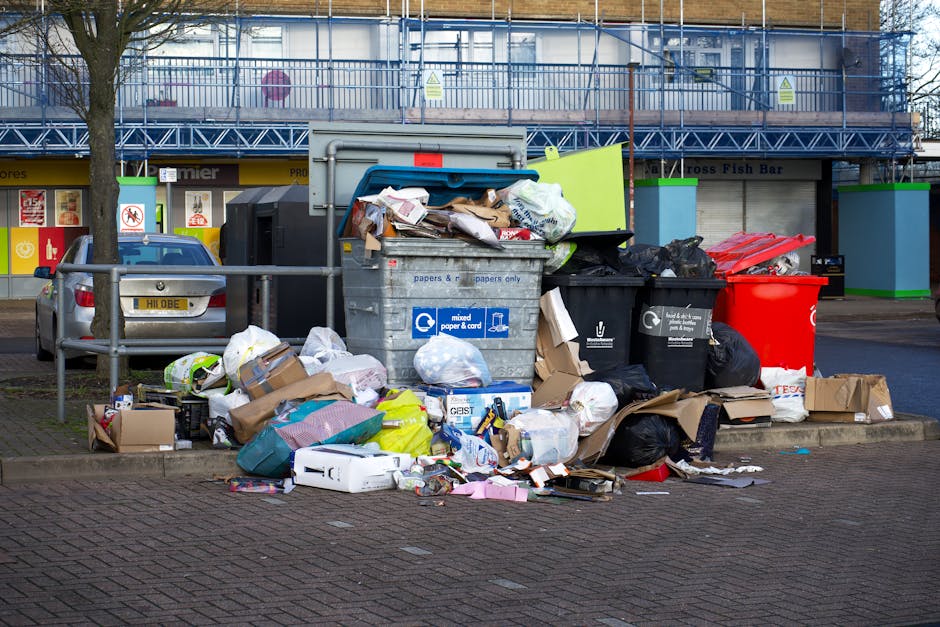
Avoid hidden rubbish clearance charges in Tooting explained

If you are trying to clear a flat, a house, a garage, or a pile of builders' waste, the last thing you want is a bill that suddenly grows legs. That is exactly why avoid hidden rubbish clearance charges in Tooting explained matters. People usually start with a simple question - how much will this cost? - and end up worrying about call-out fees, labour extras, parking issues, and vague "disposal surcharges" that only appear at the end. Bit annoying, to be fair.
This guide breaks the whole thing down in plain English. You will learn how rubbish clearance pricing typically works, what causes surprise costs, how to compare quotes sensibly, and which questions help you spot trouble before anyone lifts a bag. We will also cover local realities around Tooting jobs, where access, loading time, and waste type can change the final price more than most people expect.
By the end, you should feel much clearer about what to check, what to ask, and how to book with confidence instead of crossing your fingers and hoping for the best.
Why hidden rubbish clearance charges in Tooting matter
Hidden charges do more than make a job expensive. They make it hard to compare services properly, and that is where people get caught out. A quote that looks cheaper at first glance can become the most expensive option once the team arrives and starts adding fees for stairs, heavier items, restricted access, parking delays, or waste that was not clearly described up front.
In Tooting, this can happen easily. Terraced streets, flats above shops, tight stairwells, shared entrances, and busy roadside parking all affect how a clearance job is priced. A sofa in a third-floor flat is not the same as a single chair at ground level, and anyone who has watched a van edge around a narrow street at rush hour knows that logistics matter. Quite a lot, actually.
It matters because rubbish clearance is one of those services where the final figure should feel predictable. You are paying for removal, transport, labour, and lawful disposal or recycling. You are not paying for mystery. When a company is unclear, it often means one of two things: either they are inexperienced, or they are relying on add-ons to boost the total later. Neither is ideal.
Expert summary: the best protection against hidden rubbish clearance charges is not finding the cheapest quote. It is finding the clearest quote.
That sounds simple, but it is where a lot of people go wrong. A clear quote lets you decide based on value, not guesswork.
How rubbish clearance pricing usually works
Most rubbish clearance services price jobs using a mix of volume, labour, access, and waste type. Some companies use load size, often described as part-load or full-load pricing. Others quote a flat price after you send photos or describe the items. Both can work well if the scope is defined properly.
The trouble starts when the quote is only based on a quick assumption. For example, if you say "three bulky items", but one of those items turns out to be a heavy American-style fridge freezer down a narrow staircase, the job may no longer match the original estimate. Fair enough in principle, but it needs to be explained clearly before booking.
Here are the main parts that usually influence cost:
- Volume: how much space the rubbish takes in the van.
- Weight: especially for dense materials like rubble, soil, tiles, or mixed construction waste.
- Access: stairs, lifts, long walks from property to vehicle, gated access, or awkward parking.
- Labour: the number of people needed and how long the clearance takes.
- Waste type: general household waste, furniture, garden waste, builders' waste, electricals, and specialist items can all be treated differently.
- Disposal route: recycling, reuse, transfer station, or other lawful handling methods.
A decent quote should explain what is included. Ideally it should say whether loading is included, whether the team will carry items from inside the property, and whether parking or congestion-related costs are covered. If those details are fuzzy, that is your cue to ask more questions. A good company will not mind.
For readers comparing related services, it can also help to look at the specific clearance type. A full house clearance job, for example, is usually priced differently from a small furniture-only collection, and a broader waste removal job may suit mixed loads better than a narrow service description.
Key benefits and practical advantages
Getting pricing right is not just about saving a few pounds, although that helps. It makes the whole process calmer and far more manageable. Nobody enjoys standing in a hallway at 8:30 in the morning while someone explains why the quoted price has jumped because the items are heavier than expected. Not exactly a great start to the day.
Here are the real benefits of being careful about hidden charges:
- Budget control: you know what to expect before the team arrives.
- Cleaner comparisons: you can compare like with like instead of chasing misleading headline prices.
- Less stress: there is no awkward back-and-forth about extra fees halfway through the job.
- Better planning: you can organise access, parking, and item placement in advance.
- Better value: clear pricing often saves more than simply choosing the cheapest quote.
- More trust: transparency usually goes hand in hand with better service overall.
There is also a practical advantage people overlook: a transparent company is easier to work with if your job changes slightly. Maybe you discover an extra mattress in the loft or a broken wardrobe in the spare room. If the pricing structure is clear, any changes can be discussed quickly, instead of becoming a small drama. And let's face it, home clear-outs can already feel like a minor life event.
For larger jobs, this clarity becomes even more important. Services such as flat clearance, garage clearance, and loft clearance often involve awkward access and variable item types, so you want the estimate to reflect the actual work, not a vague best guess.
Who this is for and when it makes sense
This topic matters to almost anyone arranging a clearance in or around Tooting, but some people feel the pinch more than others.
You will especially benefit from understanding hidden charge risks if you are:
- moving house and need a quick clear-out before completion day
- emptying a rental property between tenancies
- clearing a flat where access is tight or parking is difficult
- disposing of mixed rubbish after renovation or decorating
- removing large furniture after a room refit
- sorting out a loft, garage, shed, or storage area that has quietly filled up over years
- helping a relative with a home clearance and need things handled respectfully
It also makes sense if you are a local business dealing with office furniture, stock waste, or refurbishment debris. Commercial jobs can be more sensitive than they first look, because timing matters, access can be restricted, and waste often needs separating more carefully. For those situations, a office clearance or business waste removal service may be more appropriate than a general collection.
Sometimes the job is tiny, and that is exactly when people relax too much. A couple of bags and one broken bed frame can still attract extras if you do not confirm what "minimum charge" means. On the other hand, larger jobs can be straightforward if photos and access details are shared clearly. So the size of the job alone does not protect you. It really does not.
Step-by-step guidance
If you want to avoid surprise fees, follow a simple process before you book.
1. List everything that needs clearing
Write down the items, categories, and rough quantity. Separate furniture, appliances, bagged waste, garden cuttings, and building debris. If you think you might include extra items later, mention that upfront as a possible change rather than keeping it hidden. That one tiny detail can save a lot of irritation.
2. Take clear photos from different angles
Photos help a lot, especially for mixed loads. Make sure they show access routes too: stairs, door widths, parking distance, and whether the items are on the ground floor or up several flights. One photo of a sofa is useful. Three photos plus the hallway is better.
3. Ask what is included in the quote
This is where the awkward questions pay off. Ask whether the quote includes labour, loading, disposal, recycling, VAT if applicable, and parking-related costs. If you are on a busy street in Tooting, ask whether the team has a plan for loading without delaying the job or creating unnecessary parking charges.
4. Clarify what would change the price
Good providers should be upfront about triggers for extra cost. Typical ones include heavier-than-described waste, restricted access, extra labour, and unplanned additional items. The key is not that extras exist. The key is that they are explained before arrival.
5. Compare more than one quote
Do not compare only the total number. Compare scope. One quote may look higher but include everything, while a cheaper quote may exclude carrying items from upstairs or may cap the volume very tightly. Apples and oranges. Classic trap.
6. Confirm the booking in writing
Even a short confirmation message helps. It should mention the agreed items, the price basis, the access details, and any limits or assumptions. If the provider does not want to confirm key points in writing, that is a warning sign in itself.
7. Prepare the site before the team arrives
Put items in one place if you can do that safely, clear paths, reserve access where allowed, and keep anything you do not want taken well away from the load. This reduces confusion and can also reduce labour time.
Expert tips for better results
A few small habits make a big difference to the final price and the quality of the experience.
- Be specific about the waste type. "A few things" is not enough. Say whether it is general household rubbish, old furniture, garden waste, or builders' debris.
- Separate valuable or reusable items. If there are usable chairs, cabinets, or appliances, mention that. Some items may be better handled through reuse or dedicated furniture clearance or furniture disposal services.
- Ask about access before the day. In Tooting, road layout and parking restrictions can matter more than people expect.
- Be honest about awkward items. Heavy mirrors, broken wardrobes, paint tins, and rubble are not the same as light bagged waste.
- Check whether sustainability is part of the service. A provider with a clear approach to sorting and recycling can reduce landfill use and may handle mixed waste more responsibly.
If you have ever stood by a front door while three people silently look at a chest of drawers that will not fit around the corner, you already know why this matters. A five-minute clarification before the job can save twenty minutes of problem-solving later. Maybe more.
It is also sensible to ask about the company's overall approach to safety and handling. Pages such as health and safety policy and insurance and safety can give you a better sense of how seriously they take the work, which matters when lifting, carrying, or accessing tight spaces.
Common mistakes to avoid
Most surprise charges happen because of avoidable assumptions. The same patterns come up again and again.
- Choosing the lowest headline price without reading the details. This is probably the biggest one. If a quote looks unusually cheap, check what is missing.
- Failing to mention stairs or distance. A ground-floor collection is very different from carrying waste down several flights.
- Not separating waste types. Mixed waste, electronics, mattresses, and rubble often have different handling needs.
- Assuming parking will not matter. In busy parts of London, parking and waiting time can be part of the real cost.
- Ignoring weight-heavy materials. Soil, tiles, bricks, and plasterboard can change the job more than sheer volume.
- Leaving everything until the day of collection. Last-minute additions are where misunderstandings tend to creep in.
- Not asking about VAT or minimum charges. These are not hidden if they are stated clearly, but they can feel hidden if nobody mentions them.
There is a subtle one too: assuming every company prices the same way. They do not. Some use loading volume, some use item-based pricing, and others base costs on labour time or clearance category. So the comparison needs to be thoughtful, not rushed. Otherwise you are comparing a full-service quote with a bare-bones number and calling it "cheap".
Tools, resources and recommendations
You do not need special software to avoid hidden rubbish clearance charges, just a decent checklist and a bit of organisation. Still, a few simple tools help.
- Your phone camera: take wide shots and close-ups of the waste.
- Notes app or paper list: write down item types, floor level, and access details.
- Measuring tape: useful for bulky furniture, doorways, or tight corridors.
- Parking awareness: check the street conditions around the agreed time of arrival.
- Photos of tricky access: stairs, low ceilings, side entrances, locked gates, or narrow paths.
If you are clearing a specific type of space, it may help to look at a more focused service. A home clearance can suit domestic overspill, while builders waste clearance is better for renovation debris and heavier materials. Garden work has its own quirks too, so garden clearance is worth considering if you are dealing with soil, cuttings, old pots, or broken outdoor items.
If sustainability matters to you, look for providers who talk clearly about sorting, reuse, and recycling. A sensible recycling and sustainability approach is usually a sign that the company thinks beyond simply dumping everything into the nearest container. That tends to be a good sign, in our experience.
Law, compliance, standards, or best practice
Rubbish clearance is not just a practical service; it also involves legal and environmental responsibilities. While this article is not legal advice, it is worth knowing the broad expectations. Waste should be handled, transported, and disposed of lawfully. If a provider seems vague about where waste goes or how it is processed, that should make you pause.
For your own protection, best practice is to use a company that can explain its process in simple terms. That includes how waste is sorted, whether recyclable material is separated, and what happens to restricted or specialist items. Good operators are usually comfortable discussing this without sounding defensive.
It is also sensible to keep records of the quote, the booking confirmation, and any changes agreed on the day. If something goes wrong, that paper trail matters. Not glamorous, I know, but useful.
Customers should also be aware of the service terms, pricing terms, and complaint route. A provider with clear terms and conditions, a visible complaints procedure, and secure payment handling such as payment and security information is usually easier to trust.
For general trust signals, a clear about us page can also help you understand who you are dealing with, and a transparent pricing and quotes page is often one of the best indicators that a company takes hidden-charge concerns seriously.
Options, methods, or comparison table
There is more than one way to arrange rubbish clearance, and the best option depends on how much you have, what kind of waste it is, and how urgent the job feels.
| Method | Best for | Pros | Watch-outs |
|---|---|---|---|
| Item-based clearance | Single bulky items or a few named pieces | Simple when the scope is clear | Can become expensive if extra items appear |
| Volume-based collection | Mixed loads and medium-sized clear-outs | Good for comparing load size and labour | Needs accurate description and photos |
| Room or property clearance | Flats, houses, or full-space clearances | Helpful when many items are involved | Access and item categories must be confirmed |
| Specialist waste removal | Builders' waste, office waste, or heavy materials | Better suited to specific waste streams | May need more detail upfront |
For smaller jobs, a simple item-based quote may be perfectly fine. For larger or mixed jobs, a property-based approach can be easier and more honest, because it reflects the real work involved. If you are unsure, ask the provider which method they use and why. A clear answer is often a good sign.
Case study or real-world example
Here is a realistic example based on the kind of job people often arrange in Tooting.
A resident in a first-floor flat wanted to clear an old wardrobe, a mattress, several bagged items, and some broken shelving. The first quote they received was attractive on price, but it only covered "basic collection". When they asked what that meant, the provider added charges for stairs, parking, and extra labour if the wardrobe needed dismantling. The price changed enough that the original quote no longer looked like a bargain.
They then compared a second quote that was slightly higher but included loading from the flat, the likely dismantling work, and a clear explanation of how access would affect the job. The second option turned out to be better value because the scope was honest from the start. No drama, no awkward renegotiation at the door, and the whole thing was done in one visit.
That is the pattern worth looking for. Not the flashiest number. The clearest one.
Another common example is a garden clear-up after a long weekend of pruning and digging. The waste can look light at first, but once the bags are stacked, there may be soil, branches, old planters, and bits of fencing mixed together. If the quote only covered green waste and the load turns out to include heavier mixed material, an adjustment may be justified. The point is not to avoid all extra charges at any cost. The point is to avoid surprise charges.
Practical checklist
Use this checklist before you confirm a rubbish clearance booking in Tooting.
- Have I listed all items clearly, including anything bulky or heavy?
- Have I sent photos of the waste and the access route?
- Do I understand whether the quote includes labour, loading, disposal, and VAT?
- Have I asked what could trigger extra charges?
- Have I confirmed stairs, parking, lifts, and walking distance?
- Have I checked whether specialist items need separate handling?
- Have I compared the scope, not just the price?
- Have I kept the quote and booking details in writing?
- Do I know how the company handles recycling, reuse, or disposal?
- Have I read the key service terms before I agree?
If you can tick most of those boxes, you are in a much stronger position. It is a small bit of admin that saves a lot of hassle later.
Conclusion
To avoid hidden rubbish clearance charges in Tooting, focus on clarity, not guesswork. The best quote is not always the cheapest one. It is the one that explains what is included, what might change, and how the job will actually be carried out in your property, on your street, and on your schedule.
Take photos, ask direct questions, and get the details in writing. That is really the heart of it. Simple, but not always done.
If you are planning a clear-out soon, use the information above to narrow down the right option and feel a bit more in control. That alone can turn a stressful job into something much more manageable, and a lot less expensive than it might first seem. One careful check now is worth far more than a surprise bill later.
Get a free quote today and see how much you can save.
Frequently Asked Questions
What counts as a hidden rubbish clearance charge?
A hidden charge is any extra cost that was not made clear before the booking, such as labour add-ons, stairs fees, parking costs, or surcharges for waste that was not fully described. If it was genuinely explained upfront, it is not hidden, even if it is inconvenient.
How can I spot a quote that is too vague?
If the quote only gives a total without explaining what is included, that is too vague. You want to know whether loading, disposal, access issues, and VAT are covered. The fewer details you have, the harder it is to compare properly.
Do I need to send photos before booking?
It is strongly recommended. Photos reduce misunderstandings and help the provider judge volume, access, and item type more accurately. In practice, they save time for everyone and often make the quote more reliable.
Why do stairs or access affect the price?
Because the team may need extra time and labour to move items safely. A ground-floor job is much quicker than carrying heavy furniture from an upper floor, especially if the stairwell is narrow or awkward.
Can I avoid extra costs by putting everything outside first?
Sometimes, yes, but only if it is safe, allowed, and practical. You should still confirm with the provider. Leaving items outside does not always remove costs, and some waste can only be handled correctly when it is assessed on-site.
Is the cheapest rubbish removal service the best option?
Not usually. The cheapest quote may exclude important parts of the job. A better approach is to compare what is included, how transparent the provider is, and whether the service matches the actual amount of waste you have.
What if I have mixed waste, not just one type?
Mixed waste is common and often completely manageable, but it should be described clearly. A mix of furniture, bags, and heavier material may need a different quote than a simple single-category collection.
Should I ask about recycling before I book?
Yes, if that matters to you. Many customers prefer a provider that sorts items responsibly and aims to recycle where possible. It is a good trust signal as well, because it shows the company is thinking beyond the quick pick-up.
Are commercial and domestic clearances priced the same way?
Not always. Commercial jobs may involve different access needs, timing, and waste categories. A flat, office, shop, or storage unit can all create different pricing conditions, so the service type matters.
What should I do if the final bill is higher than expected?
Ask for a clear explanation of the difference between the agreed quote and the final amount. Keep your booking details, photos, and messages. If the extra cost was not discussed beforehand, you should query it calmly and directly.
How far in advance should I arrange a clearance in Tooting?
If the job is small and flexible, a short lead time may be fine. For larger clearances, awkward access, or jobs tied to a move-out date, it is wiser to book earlier so there is time to confirm details and avoid rushed decisions.
What is the best way to compare different clearance companies?
Compare scope, not just price. Look at what each quote includes, how clearly the provider explains extras, whether they mention disposal and recycling, and whether they give written confirmation. That gives you a far better picture than a single number alone.