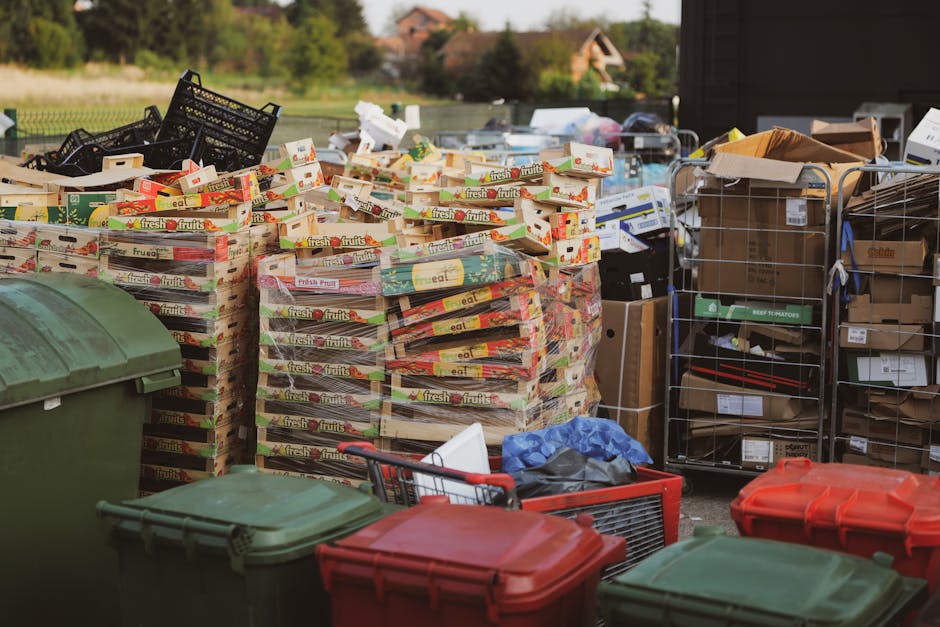
House clearance in Tooting

House clearance in Tooting should feel practical, orderly and easy to arrange, whether you are clearing a single room, a full property or a mix of bulky items and household contents that need to be removed with care. We provide a straightforward service for homes, flats and inherited properties, with work planned around the items present and the access available. That can include furniture, white goods, general household clutter and other unwanted contents that need to be handled in a sensible way.
Our approach is built around careful removal and tidy sorting, rather than a one-size-fits-all collection. Some clearances are mainly about a few large objects; others involve many smaller items across several rooms. In either case, the aim is to leave the property ready for its next stage, with materials separated where possible and waste sent on through the right channels. If you need a clearer idea of the likely scope, a pricing and quotes page can help explain the factors that shape the work.
If you are planning a clearance in the area, start by noting the rooms involved and the type of contents that need to go. When you are ready, ask for a quotation and we will help you choose the most suitable service level for the property.
Full and partial house clearance
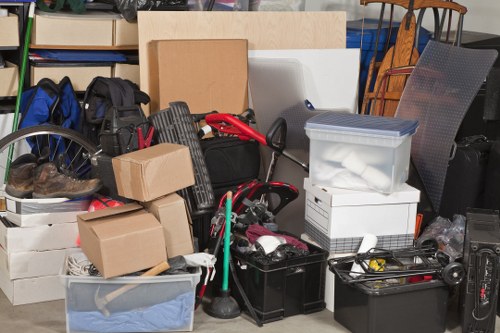
A full house clearance is usually the best fit when most of the contents need removing from a property. That might follow a move, a renovation, probate, a tenancy ending or a long period of accumulated belongings. A partial clearance suits rooms or areas where only selected items need to be taken away. We can work to a clear item list, separating what stays from what goes, so the job stays focused and there is less risk of confusion on the day.
In a domestic setting, the scope often includes sofas, tables, wardrobes, beds, shelving, small appliances, mixed bagged waste and other household items that are no longer needed. If the property contains a variety of furniture, the process is usually easier when larger pieces are removed first and then the smaller contents are sorted. For items such as old seating or bedroom furniture, our furniture clearance service is a useful option where the main challenge is heavy or awkward household pieces.
When a clearance is planned properly, the outcome is less disruptive for everyone involved. You can decide whether the entire property is to be emptied or whether just one floor, room or category of belongings should be dealt with. Tell us what must remain in place and what can be removed, and we can build the quotation around that scope rather than around a generic estimate.
Furniture, appliances and bulky household items
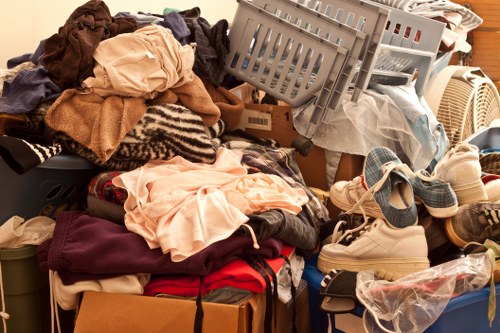
Many house clearances are dominated by bulky items that are difficult to move without the right equipment or enough people to do the lifting safely. That can include wardrobes, sofas, cabinets, beds, mattresses, fridge-freezers and other large domestic objects that take up valuable space. The service is designed to remove those items efficiently while keeping the process controlled, especially where hallways, staircases or narrow landings make access more awkward.
Where furniture is still in a reusable condition, it may be suitable for separate handling rather than being treated exactly like mixed waste. Where it is damaged, heavily worn or no longer usable, the removal plan changes accordingly. For customers who mainly need large items taken from a single room or from several floors, furniture disposal can be a practical route when the focus is on getting the items away cleanly and responsibly.
Not every bulky item creates the same level of effort. Flat-pack units, solid wood furniture, integrated appliances and oversized wardrobes each present different moving considerations, so the quotation normally reflects both the amount to be removed and the difficulty of access. Clear information on what needs lifting, dismantling or carrying helps keep the arrangement accurate from the start.
Lofts, garages and other storage-heavy spaces
Homes in Tooting often include spaces where belongings have been stored for years, and those areas can need a different approach from the main living rooms. Lofts, garages and outbuildings commonly contain mixed contents: old boxes, broken furniture, seasonal decorations, tools, fabrics and household leftovers that have gradually built up. A focused clearance in those areas can make a property easier to manage without disturbing every room in the house.
Our loft clearance service is suited to upper-floor and roof-space removals where access may be awkward and items have to be moved carefully down through the property. Likewise, garage clearance can help where the space is being reclaimed for parking, storage or general use and the contents have become too mixed to sort out casually. In both cases, the work is planned around safe lifting, sorting and removal, with attention to what can be handled separately.
Before clearance begins, it helps to identify any items you want kept, especially in storage areas where personal belongings and disposable clutter may be mixed together. A quick walk-through, item list or set of photos can be enough to define the job clearly. Specificity at this stage keeps the final plan simpler and reduces the need for last-minute changes once work is under way.
Waste removal for mixed domestic contents
Some jobs are not really about one room or one category of item, but about a broad mix of domestic waste that has built up across the property. That may include bagged rubbish, odd items from different rooms, broken household goods and contents that no longer have a practical home. For those cases, a more general waste removal approach can be the right fit, especially where the property needs to be returned to a usable condition without unnecessary delay.
Our waste removal page covers the broader service where the load is made up of mixed items rather than one dedicated category. For domestic clearances, this can be helpful when the room contents are varied and there is no single material type that defines the work. If the job involves accumulated rubbish from a refurbishment or a tidy-up, the same careful sorting and disposal principles still apply.
General waste work is often best when paired with a short, plain description of what is present and what is not. Mention whether there are large items, fragile contents, heavy bags or anything that needs special handling, and that allows the quote to be based on real conditions rather than guesswork. Where needed, we can talk through the practical differences between a room-based clearance and a mixed-load removal.
Before the visit: access, sort-out and quotation details

A good quotation starts with a clear picture of access and contents. For a house clearance, the main points are usually the number of rooms involved, whether stairs or loft access are part of the job, and whether any items need dismantling before removal. It also helps to know if parking or loading space is limited. These practical details are often more important than the property type itself, because they affect the time and effort needed to complete the work.
If you are preparing a request, a short list of items, room-by-room notes or a few photographs can make the scope easier to assess. You do not need to over-explain every object; the aim is simply to show what is present, what is staying and what must go. If the property includes items for different services, our house clearance page is a useful place to understand the broader domestic service before you request a figure. The same principle applies whether the job is planned in advance or arranged after a change of circumstances.
One useful way to keep the process efficient is to gather the items you definitely want removed in one place where that can be done safely. That does not mean sorting everything in detail beforehand, but it does help to separate keepers from clearances so the work can begin without unnecessary hesitation. Please ask for a quotation when you are ready, and we will respond with a clear view of the likely scope.
Furniture, rooms and other domestic clearances
House clearance work often overlaps with specific room or item categories, and it can be useful to think about the job in that way when planning what needs to happen first. A front room full of heavy furniture is not the same as an upstairs bedroom with smaller contents, and a property with a few bulky items may need a different method from a full clearance. The service is therefore arranged around the actual contents and access, not around a fixed checklist.
Where the contents are concentrated in one type of room or furniture group, the appropriate service page can help clarify the scope. For example, flat clearance may be useful where the property is compact and access is shared, while home clearance can suit broader domestic contents across multiple spaces. These pages do not replace a quotation, but they do help explain how a clearance may be structured when the property is not a simple one-room job.
Our aim is to keep the work straightforward from your point of view. Rather than forcing every clearance into the same pattern, we look at the rooms involved, the likely lifting, and whether there are useful distinctions between reusable items, waste and general household contents. That makes it easier to decide what should be removed first and what can wait until a second phase if needed.
About Tooting
Tooting is a district in south-west London within the London Borough of Wandsworth, and it sits between other well-known parts of the city such as Balham, Streatham and Colliers Wood. The area is commonly associated with Tooting Broadway and Tooting Bec, both linked by the Northern line, which gives the district a strong transport identity as well as a busy local centre. Along the main roads, the built environment mixes Victorian and Edwardian housing with shopfronts, cafés and everyday services, while side streets open into quieter residential terraces and mansion blocks. Tooting Bec Common and Tooting Graveney Common provide major open spaces nearby, and the commons are part of what gives the area a greener feel than its urban setting might suggest at first glance. The district has a long commercial history and a notably varied high street culture, with South Asian restaurants, specialist food shops and independent businesses contributing to its character. Tooting Bec Lido, one of the largest open-air swimming pools in the United Kingdom, is a notable local landmark and a reminder of the area’s recreational heritage. The Church of St Nicholas, parts of the old village layout and the continuing presence of tram and rail connections all add to the sense of a place that has changed over time while retaining a recognisable local centre. As a whole, Tooting combines dense housing, active high streets and substantial public green space, making it a distinctive part of inner south-west London.
Household contents, tidy removal and finishing steps
Once the main clearance has been carried out, the last part of the job is to leave the property in a sensible state for whatever comes next. That usually means checking that the agreed rooms have been emptied, that any remaining items are exactly the ones you asked to keep and that the space is left tidy enough for cleaning, decorating or handover. The precise finish depends on the property and the agreed scope, but a clear close-out is part of a well-run domestic clearance.
Where appropriate, the removal of mixed household contents can be combined with careful handling of items that need separating from standard waste. For example, a property may contain furniture, broken household items and general rubbish all in one room. In those situations the work benefits from a sensible sequence rather than an improvised sweep through the building. If the job is mainly about linked domestic contents, the home clearance and house clearance pages together give a helpful picture of how broader clearances are usually arranged.
When you are comparing service options, think about the scale of the clearance, the physical access and whether any items need dismantling or separate handling. Then use that information to request a quotation. If you want the work organised without fuss, send the details through and let us help you plan the clearance in a practical way.
Recycling, sorting and responsible disposal
A sensible house clearance is not just about removal; it is also about deciding what should be reused, what can be separated for recycling and what must be disposed of in the correct route. Different households produce different mixtures of materials, and the exact make-up of a clearance can affect how the load is sorted. The more mixed the contents, the more valuable it is to have a clear process for deciding what happens to each group of items.
Our recycling and sustainability page explains the wider approach to handling waste responsibly, including the general principle of reducing avoidable disposal where possible. In practical domestic clearances, that means looking at the contents carefully, keeping suitable items separate and ensuring that unusable waste is dealt with through appropriate channels. It is a steady, methodical approach rather than a dramatic one, but it is often the most efficient way to manage a clearance well.
If the property contains a mixture of reusable furniture, general rubbish and items that need special handling, the best quotation will reflect that structure. A good description of the contents allows the work to be planned properly from the outset, which is better for everyone than discovering the true scope halfway through. That is especially important where the clearance is part of a wider property change or a time-sensitive handover.